Cart
Your shopping cart is empty!
It's never too late to make things right :)



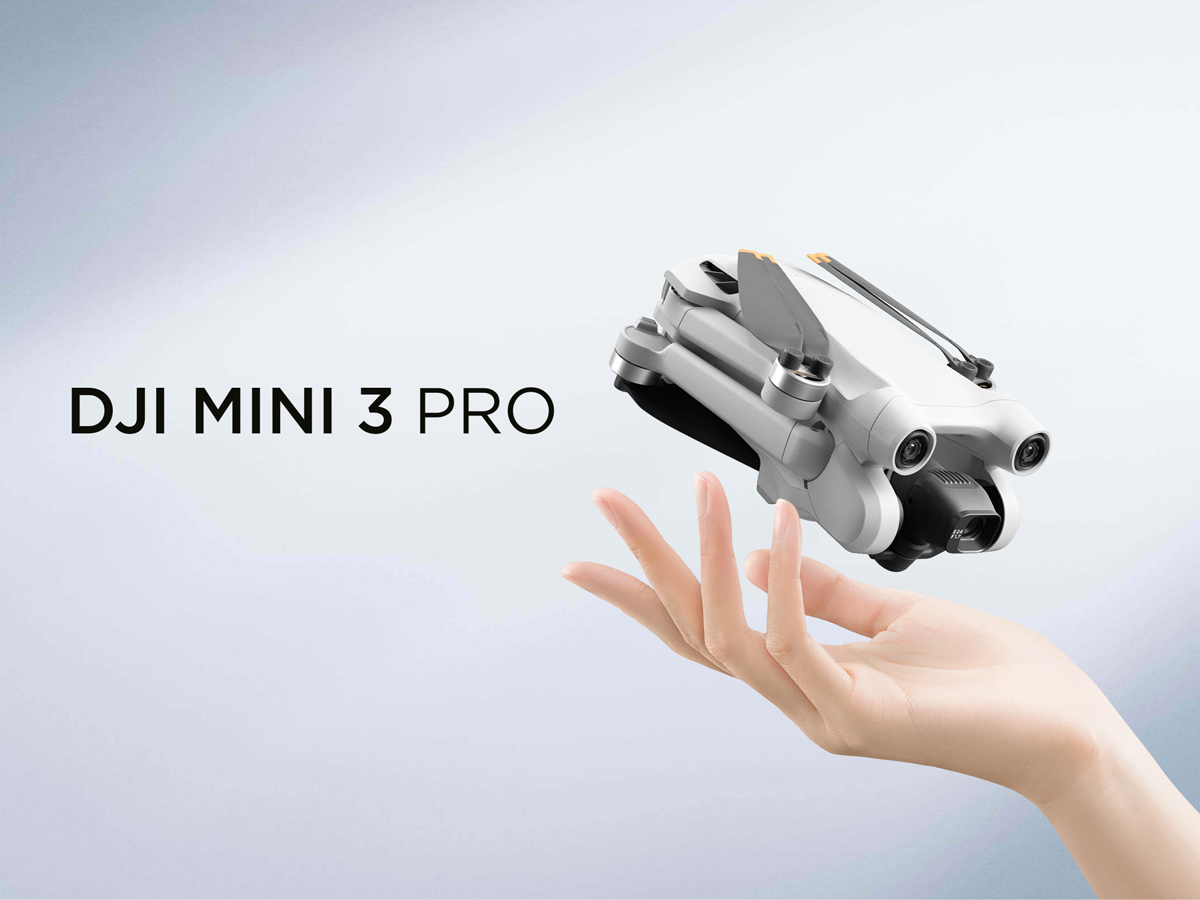
DJI has expanded its line of miniature drones with the introduction of the Mini 3 Pro. Compared to its predecessor Mini 2, the third generation has undergone a number of major changes to most components. This is indicated by the “Pro” prefix, which clearly indicates the advanced and top-end characteristics of the copter. Let's try to figure out in detail what's new for users in the Mini 3 Pro!
During test flights, the drone demonstrated top performance indicators. But the model has a compact folding body. This makes it easy to use the Mini 3 Pro on location shoots. An updated camera matrix, a new security system, and an abundance of smart modes are an ideal solution for both beginners and advanced pilots.
The improved Mini 3 Pro camera opens up new possibilities for creativity! A camera module with improved aperture, digital zoom without loss of quality, HDR support and high resolution allows you to create bright, unique and inimitable content. And the ability to change landscape orientation to portrait orientation was made specifically for those who like to post captured content on social networks without post-editing.
Of course, the price tag of the new product turned out to be a little higher than expected. And, naturally, it differs from the starting price of the Mini 3. However, it is worth understanding that you will have to fork out for the abundance of advanced technologies and high performance.
DJI has carried out a fairly extensive list of updates, presenting exactly the product that many users wanted to see. Engineers managed to 'pack' advanced technological solutions into a compact body. This step made it possible to make the drone as mobile and easy to transport as possible. It does not take up much space, it is convenient to visit various locations and shoot in the desired format.
In terms of functionality and performance, the DJI Mini 3 is almost identical to the Mavic 2 Air. But high portability clearly wins. And they become convenient for those who like to move around locations or often do on-location shooting.

Despite the abundance of technological solutions, DJI managed to stay in the “weight category” of miniature drones. The DJI Mini 3 Pro weighs 249 grams when using a standard battery. The folding design of the support beams makes the copter very convenient and practical for transportation. It can easily fit into any bag or briefcase.
Portability is one of the most important advantages of the new product. To use, just unfold the beams and the drone is ready to take off. This is a very convenient option for novice pilots. Which greatly expands the scope of use of DJI Mini 3 Pro to solve the following tasks:
The updated body design has improved aerodynamic performance. The redesigned design of the copter has improved the performance of some modules. For example, expand the viewing angle of obstacle detection sensors. The update of the blades played an important role. They have become larger in size, and the new shape has good aerodynamic properties. Which has a positive effect on flight quality and safety. In particular, wind resistance has improved.
An important innovation was the redesigned three-axis gimbal. It is mounted directly into the body, which allows for better control of the camera angle. In particular, change the shooting orientation from landscape to portrait. The large tilt angle opens up new perspectives for creativity. And, of course, the gimbal stabilization is “at the top” - no extraneous noise, rattling or other negative factors.
But the internal memory capacity of the DJI Mini 3 is quite modest, given the high resolution of the camera. The built-in memory (1, 2 GB) will run out faster than the battery has time to discharge. However, this issue can be resolved by using an additional microSD of the required volume. And for active users it is advisable to have several memory cards.
The DJI Mini 3 Pro has some pretty impressive flight characteristics. The user can count on good stability, high speed, and a signal transmission range of up to 8 km. OcuSync 3.0 technology supports shooting in 1080p resolution. The picture is very high quality and detailed. Especially when you consider that the camera lens has been updated and become larger. The user has 3 speed modes available: C, N and S.
In general, most of the characteristics are on the same level in the entire line of semi-professional amateur drones from DJI. After all, they can be used for both personal and commercial purposes, solving a wide range of problems.

The DJI Mini 3 Pro has dual-view sensors on three sides - front, rear and side. Controlled by intelligent algorithms, they effectively scan the environment, drawing a 3D map of the area. This allows the copter to navigate well in space and avoid collisions. New dual view sensors provide superior visualization of your surroundings.
By updating the body planes, it was possible to achieve a wider viewing angle. The scanning range of the front and rear sensors is 25 meters, and the bottom one is 9 meters. The updated APAS 4.0 pilot assistance system will maximize flight safety by eliminating accidents and collisions.

First of all, the DJI Mini 3 Pro drone is focused on aerial photography and creating bright and attractive content. And its level is so high that it is ideal for commercial use. Content can be published without post-processing; it is of quite decent quality. And if you need to make changes, you can do it without any problems.
A large 1/1.3-inch CMOS matrix with an f/1.7 aperture and a pixel size of 2.4 microns is installed on board. The wide-angle camera gives the user access to all advanced technologies - double ISO, direct output to HDR mode, optional D-Cinelike support.
Wide dynamic range processing of each frame provides ideal detail and high image quality. Particularly when shooting in low light conditions. D-Cinelike technology allows you to process frames and achieve the desired color solutions.
A unique solution was the adjustment of the gimbal angle, which significantly expands the range of lens movement. Shooting photos and videos in both landscape and portrait modes opens up wide boundaries for creativity. Shooting from a lower angle is available when the camera is pointed as high as possible. DJI has not previously offered such solutions in this drone segment.
The DJI Mini 3 Pro drone supports a maximum resolution of 48 MP for photos, and 4K/60 for video recording. Photos can be created in both JPG and RAW format. HDR mode supports recording speeds of no more than 30 fps. Slow motion recording is available with a resolution of 1080p/120. Digital zooming is supported without loss of quality. In 4K mode it is 2x, and in 1080p mode it is 4x.
Intelligent modes are the highlight for which users prefer high-tech drones. Using intelligent algorithms, you can flexibly control flight settings and content shooting. Changing the shooting orientation from horizontal to vertical is one of the proprietary intelligent modes of the Mini 3 Pro.
MasterShots mode allows you to automate the process of shooting the desired scene. Which is incredibly useful not only for beginners, but also for more experienced pilots. It is enough to point the camera at the desired object, and the embedded intelligent algorithms independently perform the necessary actions. Convenient, practical and effective for creating unique photo and video content.

The updated DJ RC remote control is equipped with a 5.5-inch touchscreen display with a screen resolution of 1080p. The maintained brightness level will be sufficient for comfortable reading of information. Particularly in bright sunlight. Autonomy is up to 4 hours of operation. The proprietary DJ Fly application is preinstalled, which allows you to flexibly edit content. Therefore, it has its own memory and a microSD slot. Data transmission delay is 120 ms. This is a very respectable indicator.
As an alternative remote control, the RC-N1 is used, which is also compatible with a number of other drone models from DJI. In particular, Mini 2. You can use a smartphone as a screen, since there is the necessary clamp for installation. Convenient and ergonomic controls, nothing superfluous.
Both controllers have a good video data transfer rate of 18 Mbps.

The DJI Mini 3 Pro is designed to use two different batteries, DJI Intelligent Flight Battery and DJI Intelligent Flight Battery Pro. The key difference between them is weight and battery life.
In terms of other flight characteristics, they are absolutely identical. But due to the increase in autonomy, the overall weight of the drone suffers. The weight of the drone increases to 289 grams.
DJI Mini 3 Pro configurations: what's available?
The DJI Mini 3 Pro copter is available in three configuration options, which are practically no different from each other.